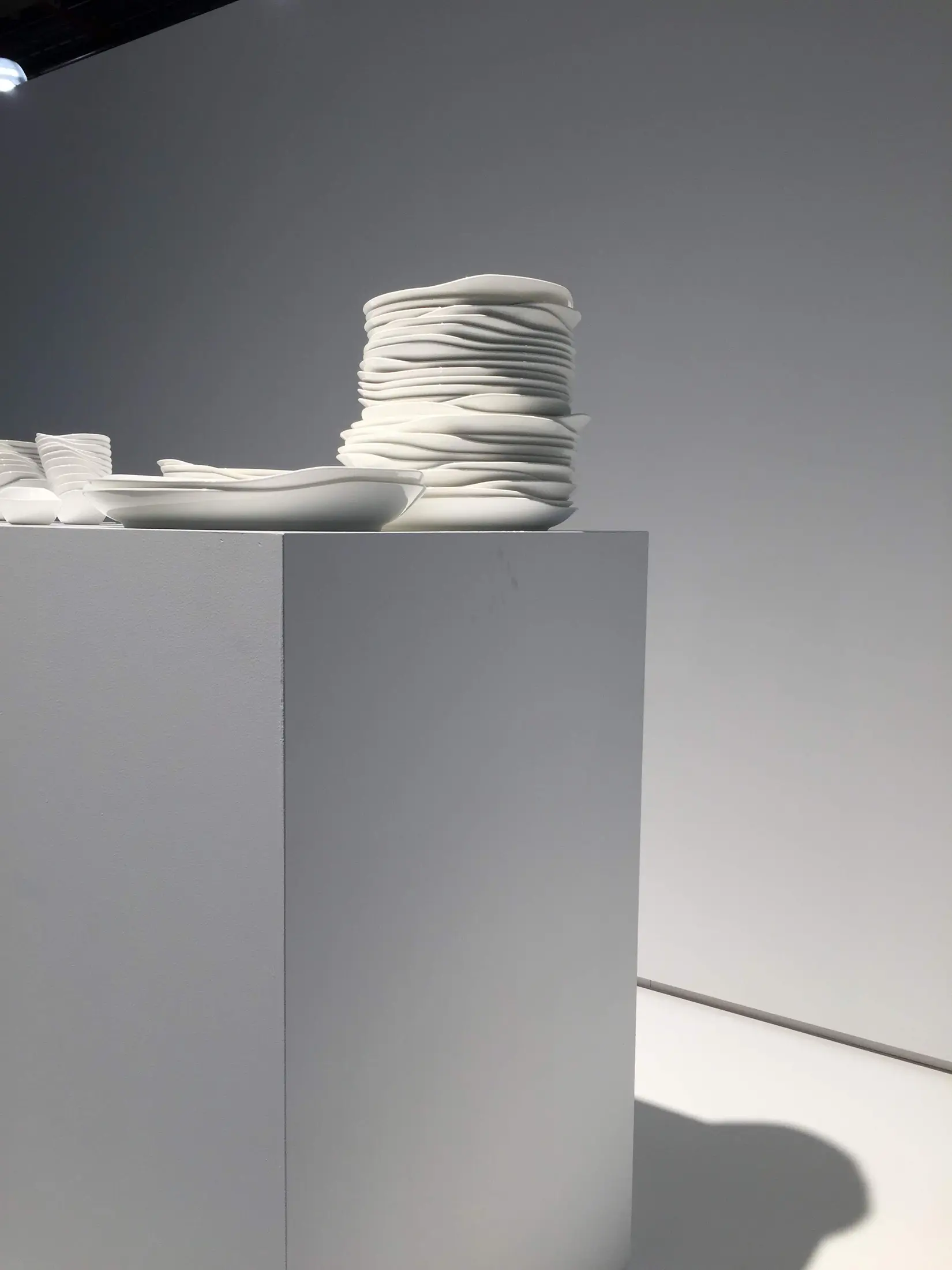
CUPBOARD / SHELF / TABLE
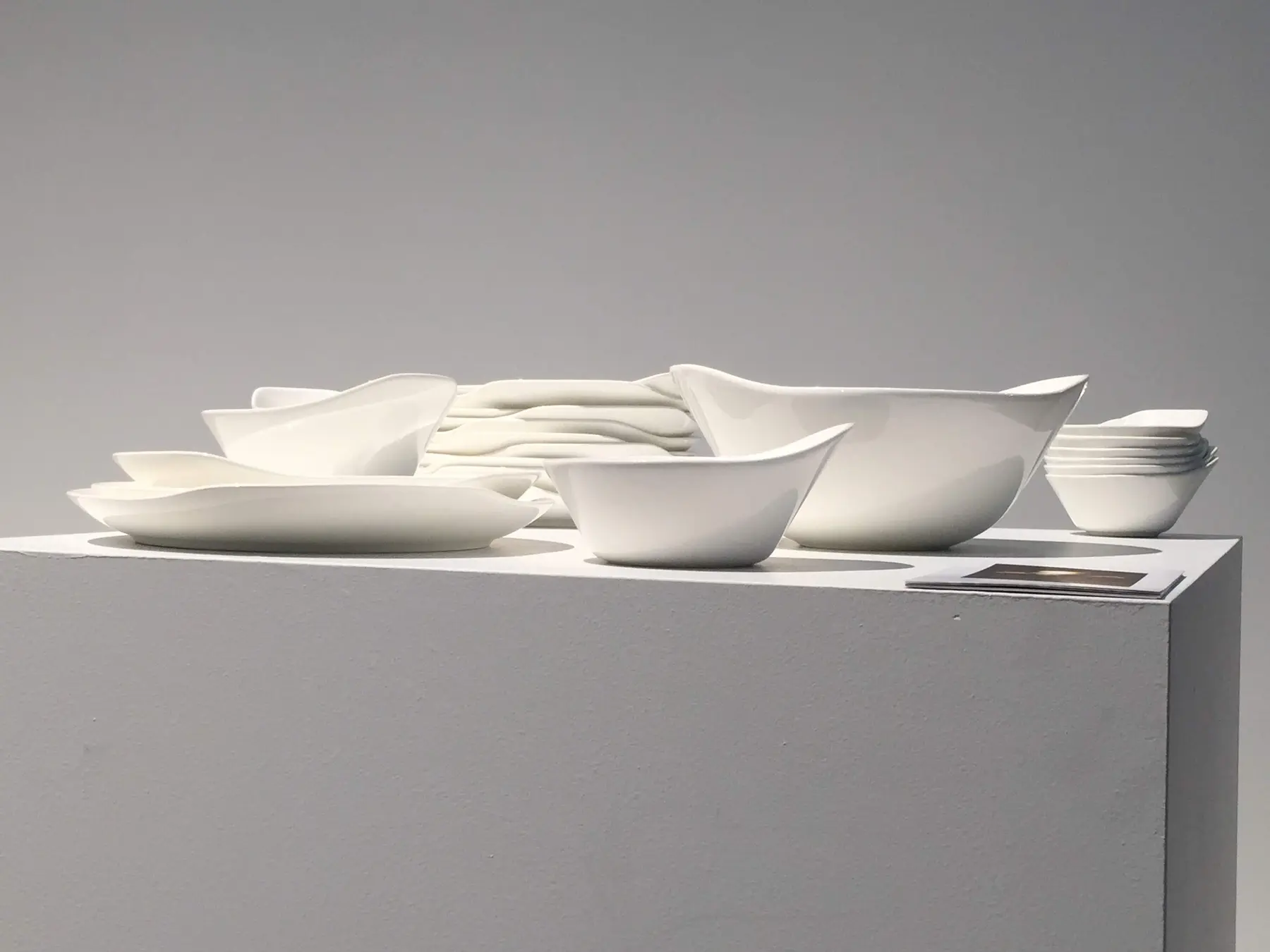
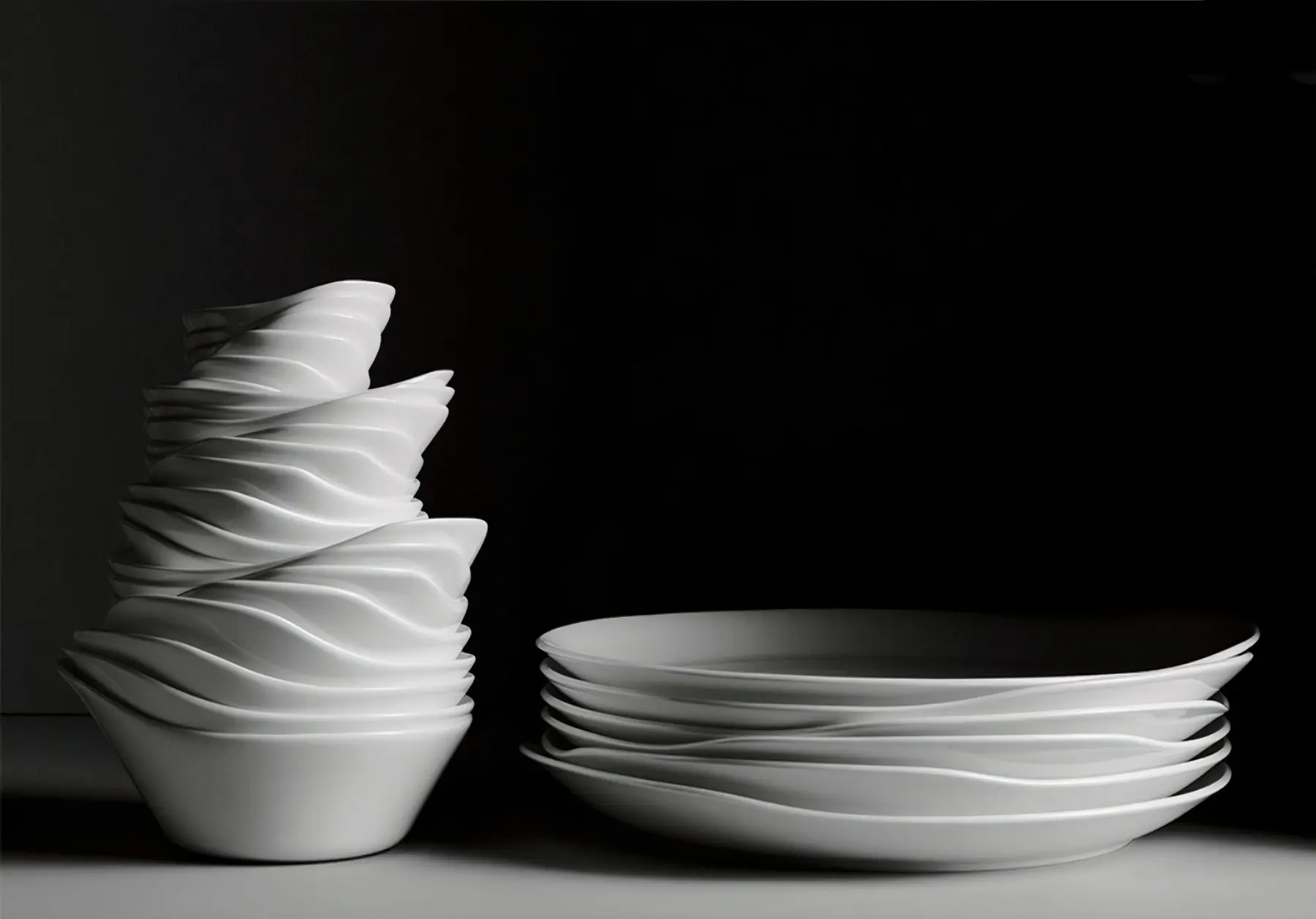
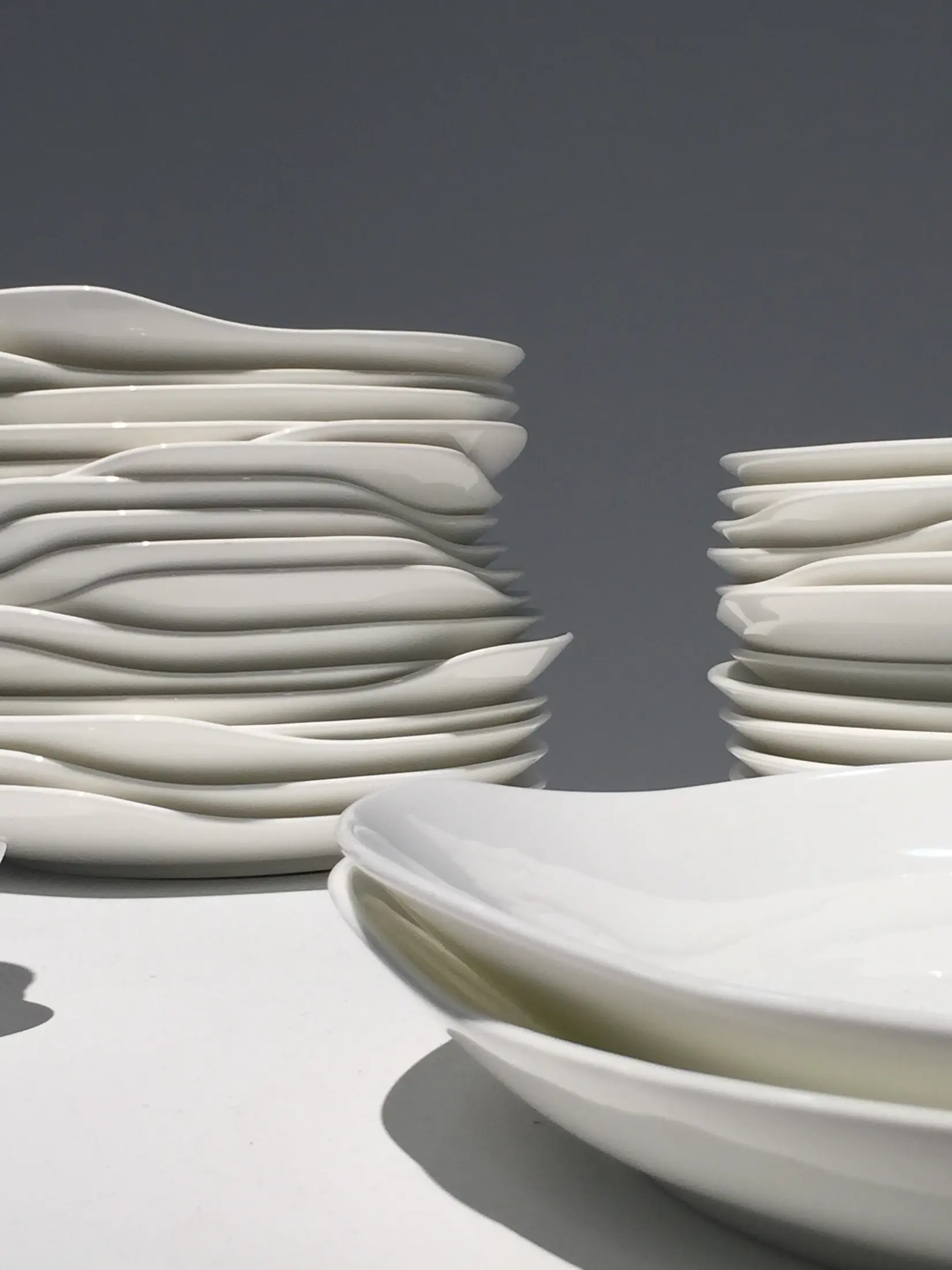
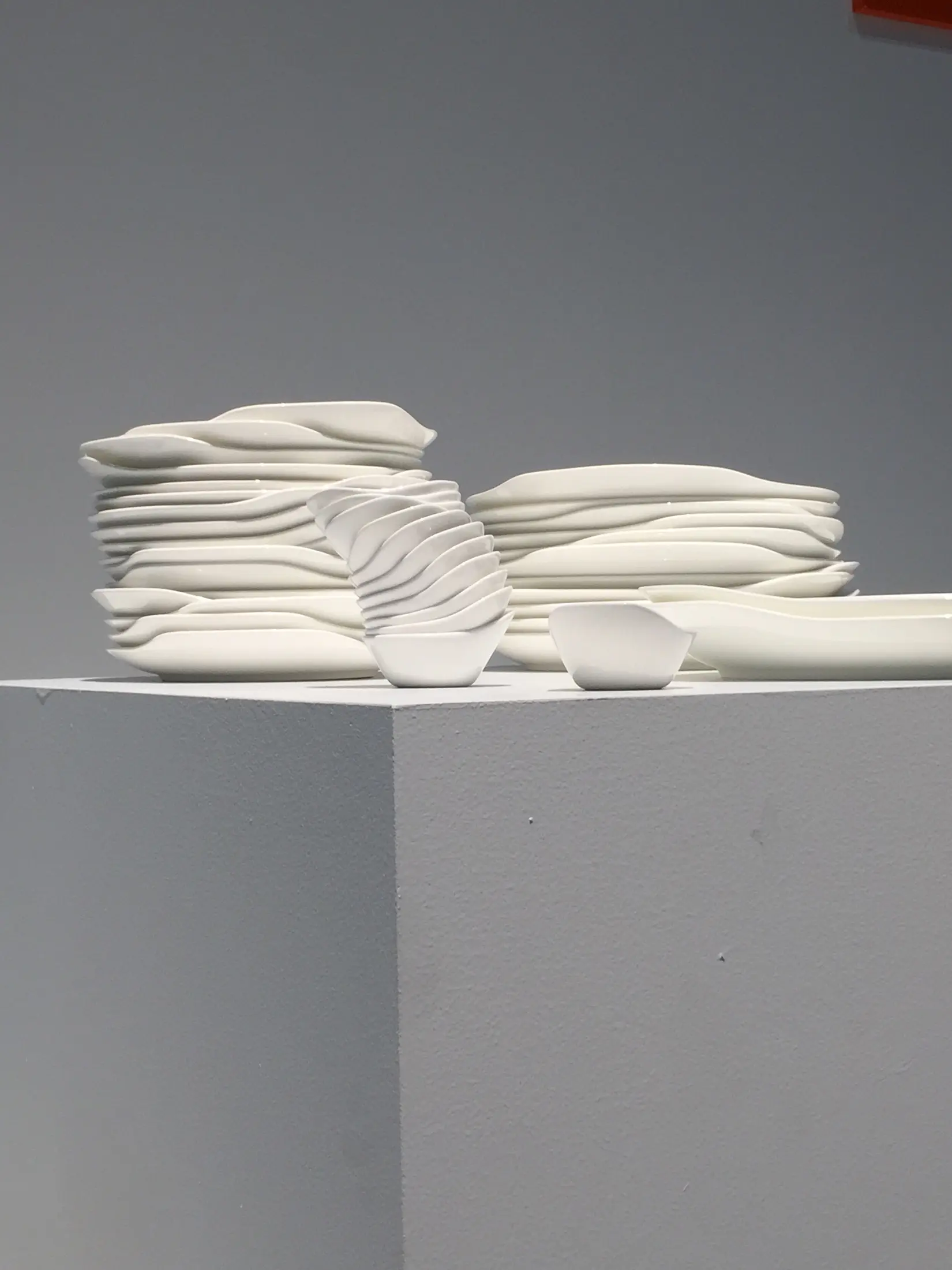
The collection never returns to one prescribed silhouette. Removing a plate, turning a bowl or adding it back makes another small landscape.

Objects / 2013—
Before Relax reaches the hand or the table, it is already being experienced. Imagine waking in the morning and seeing it in a cupboard or on an open shelf: the same pieces welcome you as a different composition each time.
You reach for one plate, rotate another and remake the stack almost without noticing. That small act keeps a familiar object from disappearing into the background. Its language stays minimal and timeless, but the encounter never becomes static.
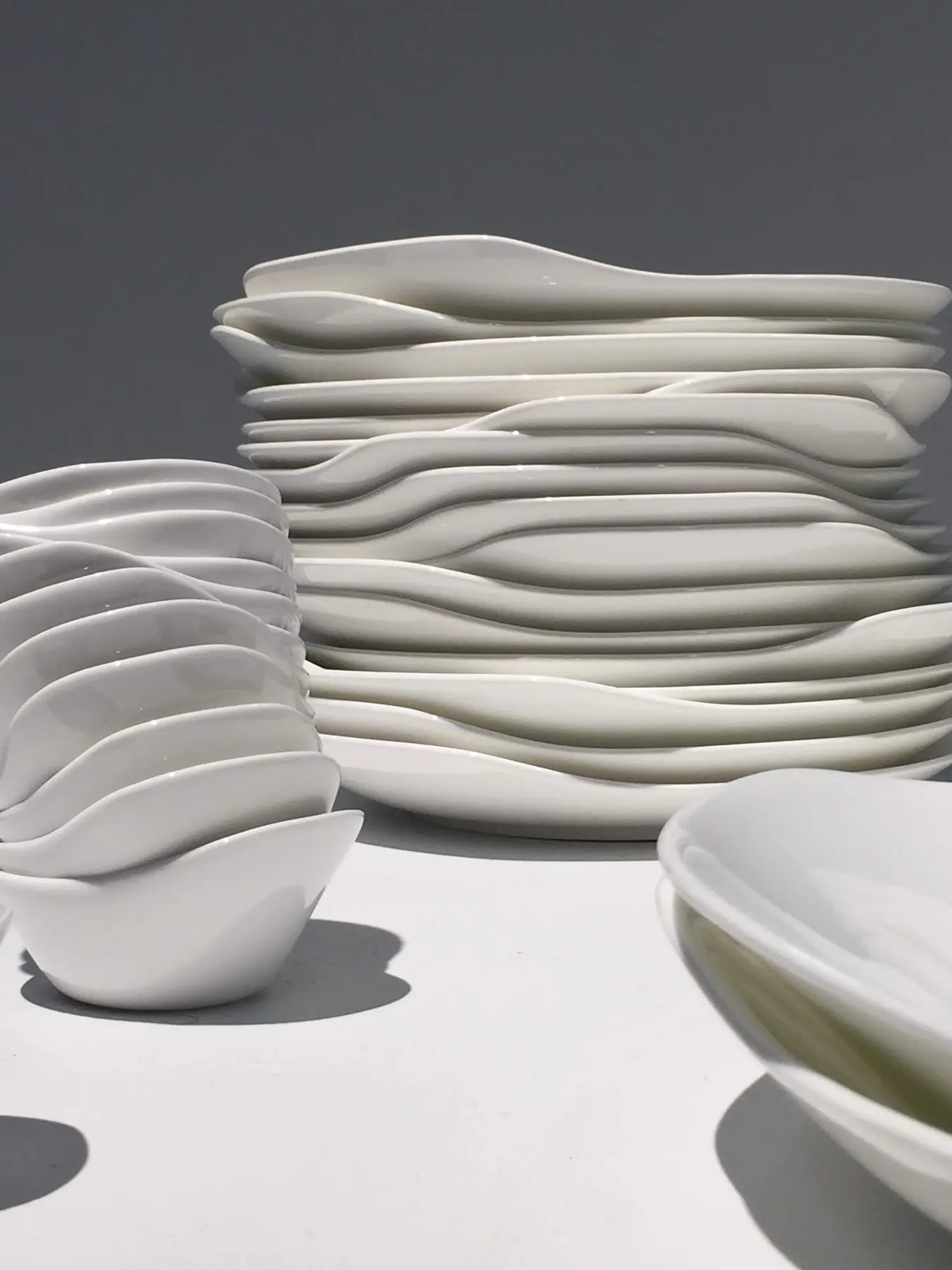
Each profile is restrained on its own. Together, their offsets become a small piece of architecture—changed by use rather than arranged for display.
A lifted edge gives the fingers somewhere natural to go. A plate can be picked up from a stack without touching its eating surface—and without scraping every piece below it.
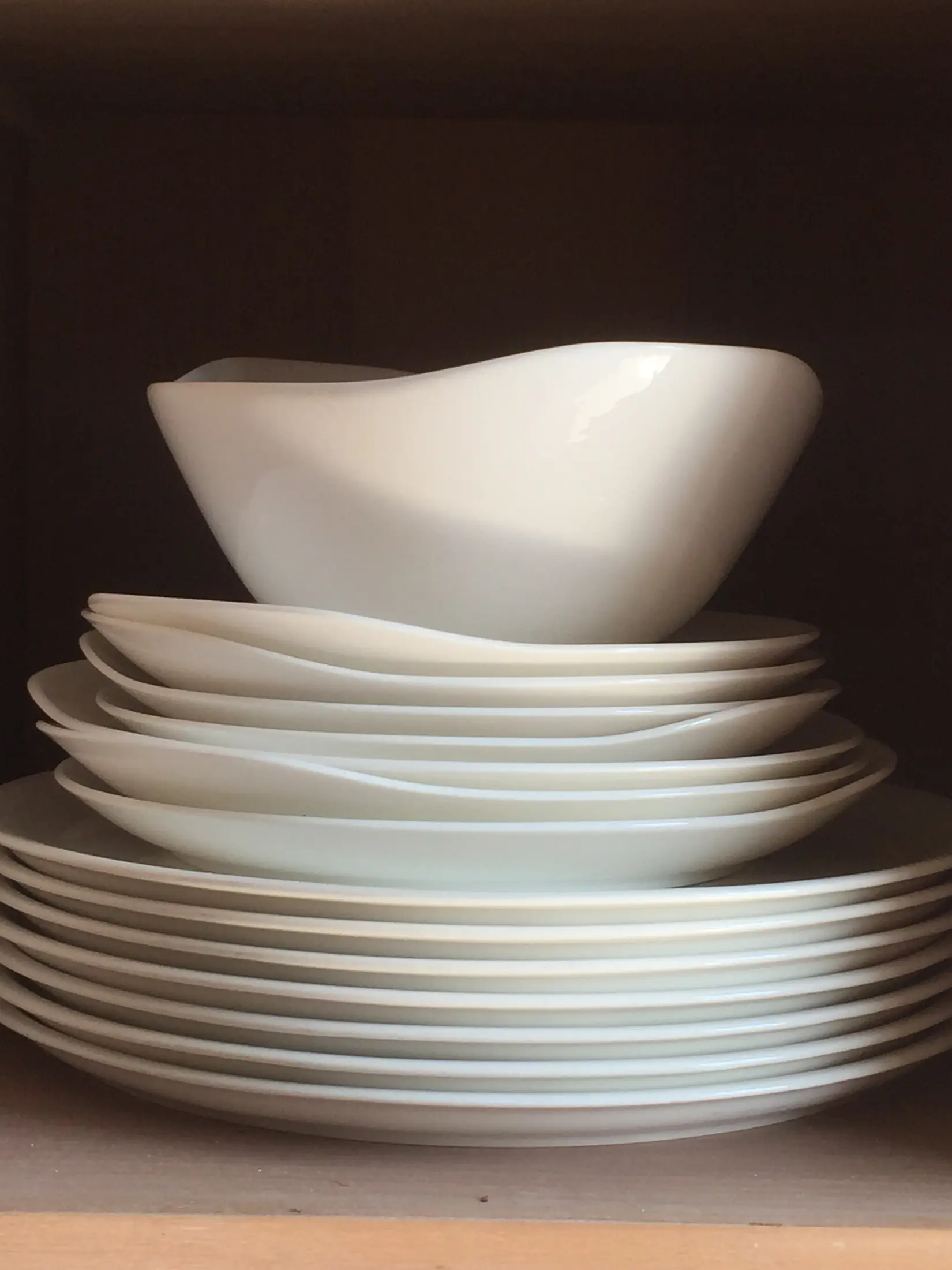
The profile becomes practical at a busy shared table: fingers find the lifted edge, pieces move between people without touching the eating surface, and a stack separates without scraping.
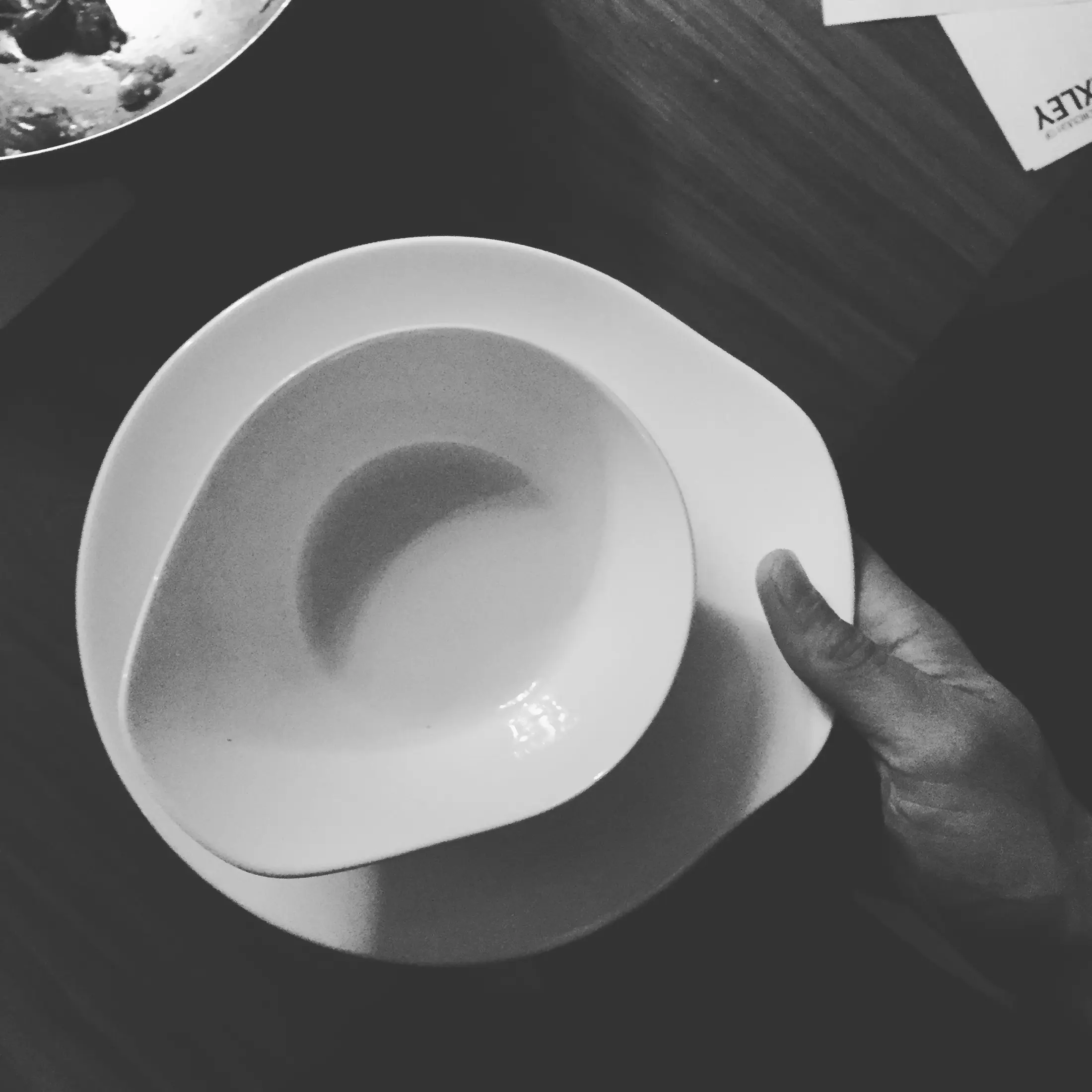
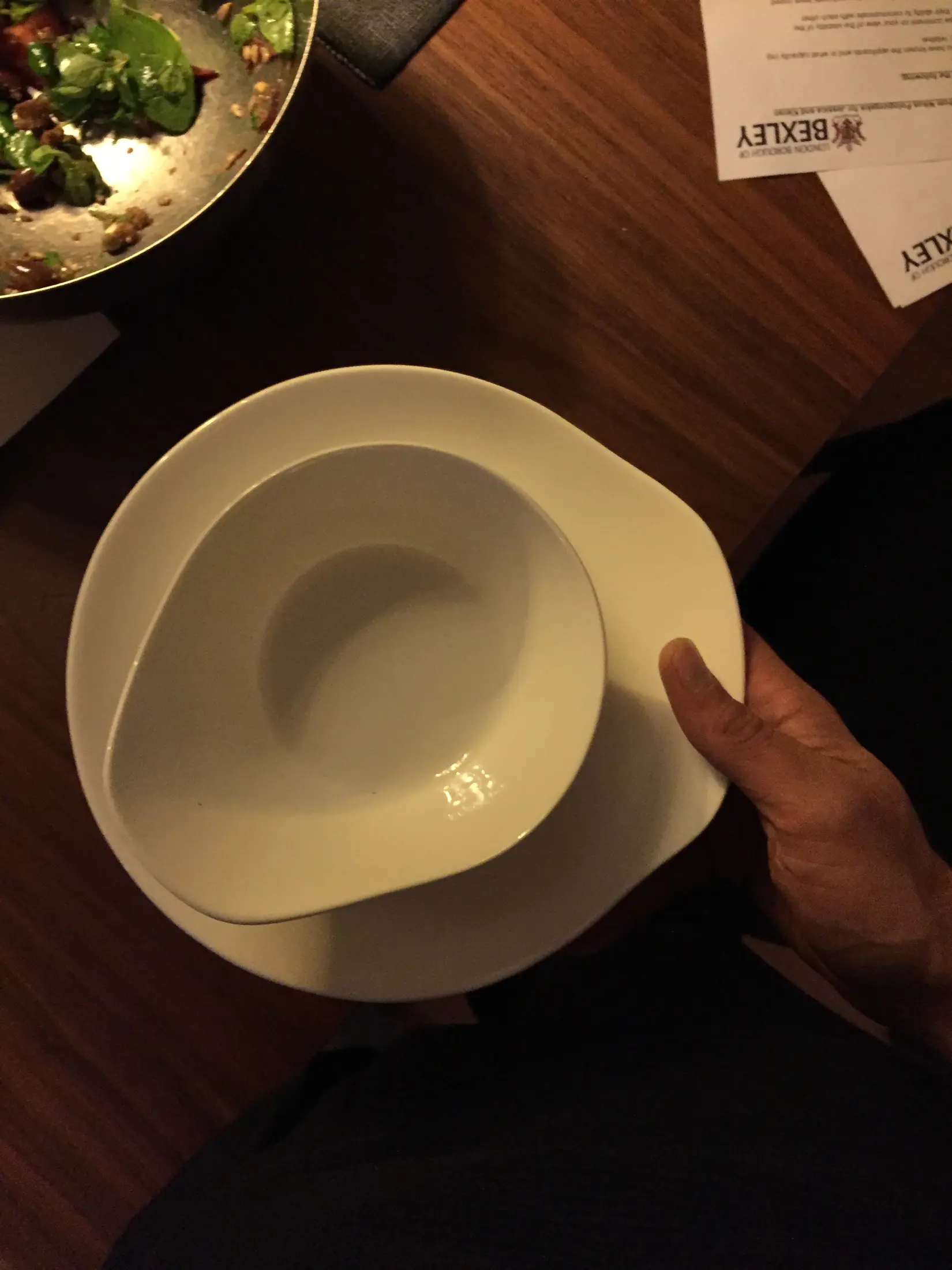
One curve creates two effects: easier separation in the hand and a different silhouette every time the family returns to a stack.
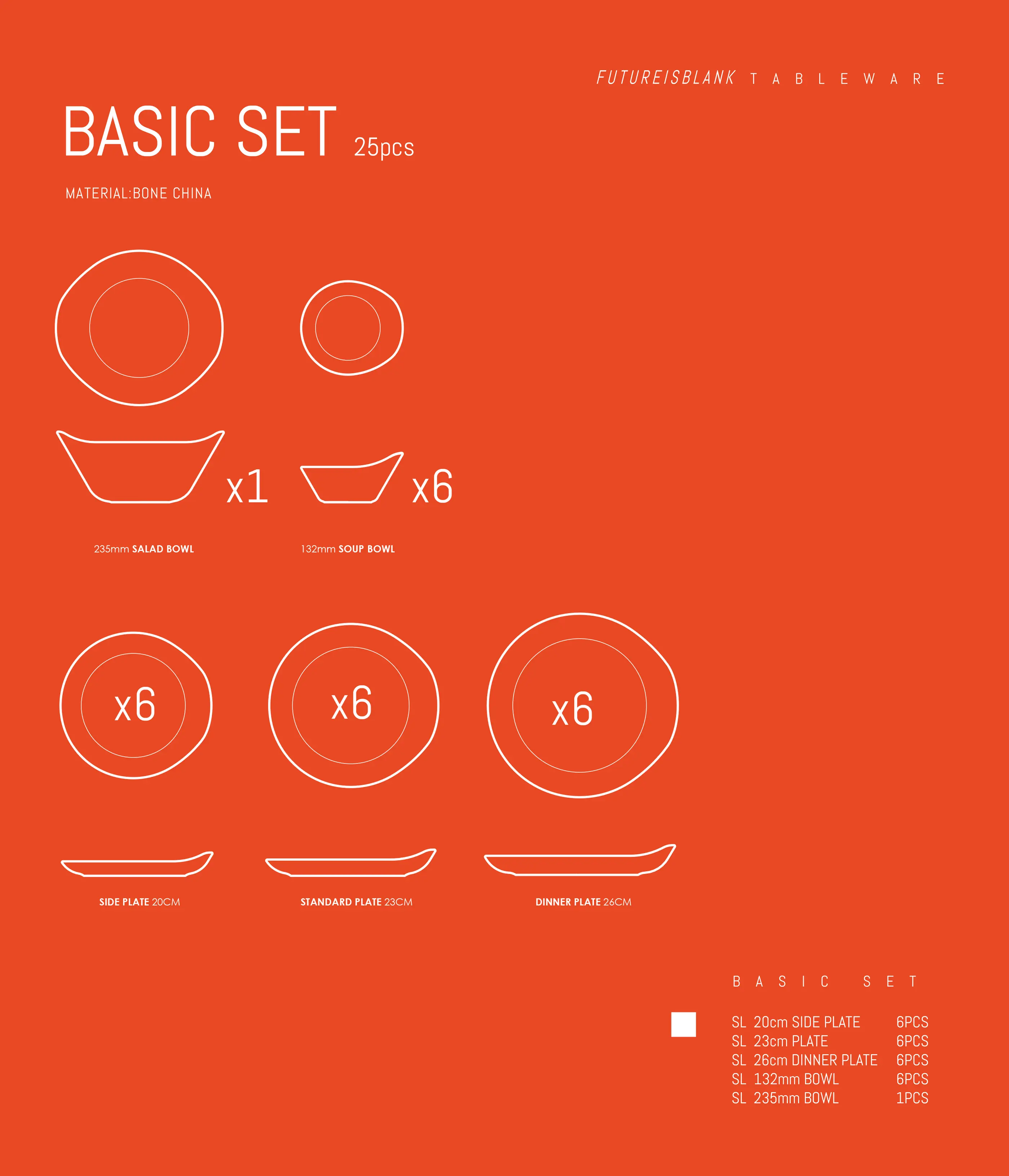
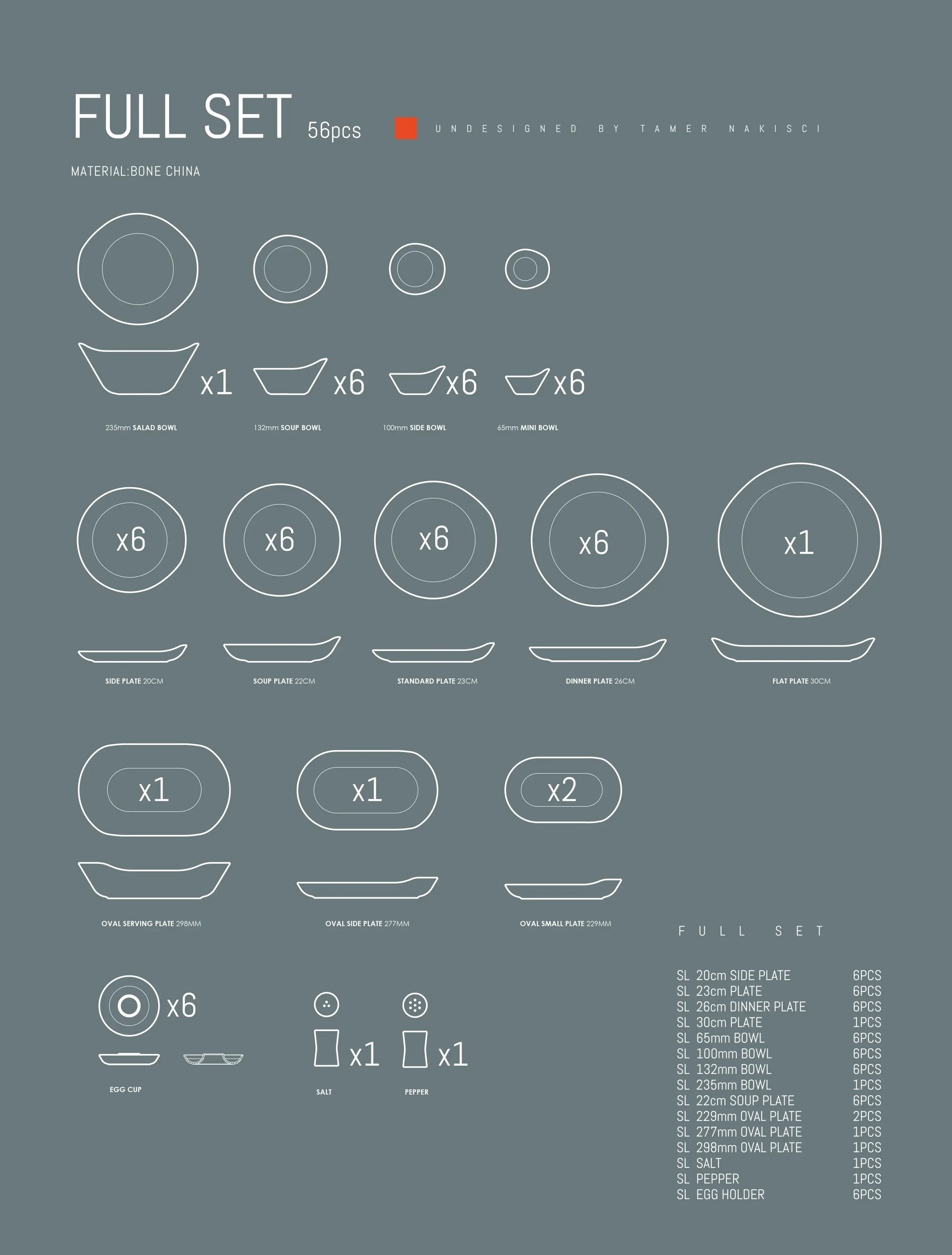
The essential 25-piece set and the complete 56-piece family share one continuous profile language—from the smallest bowl to the serving pieces.
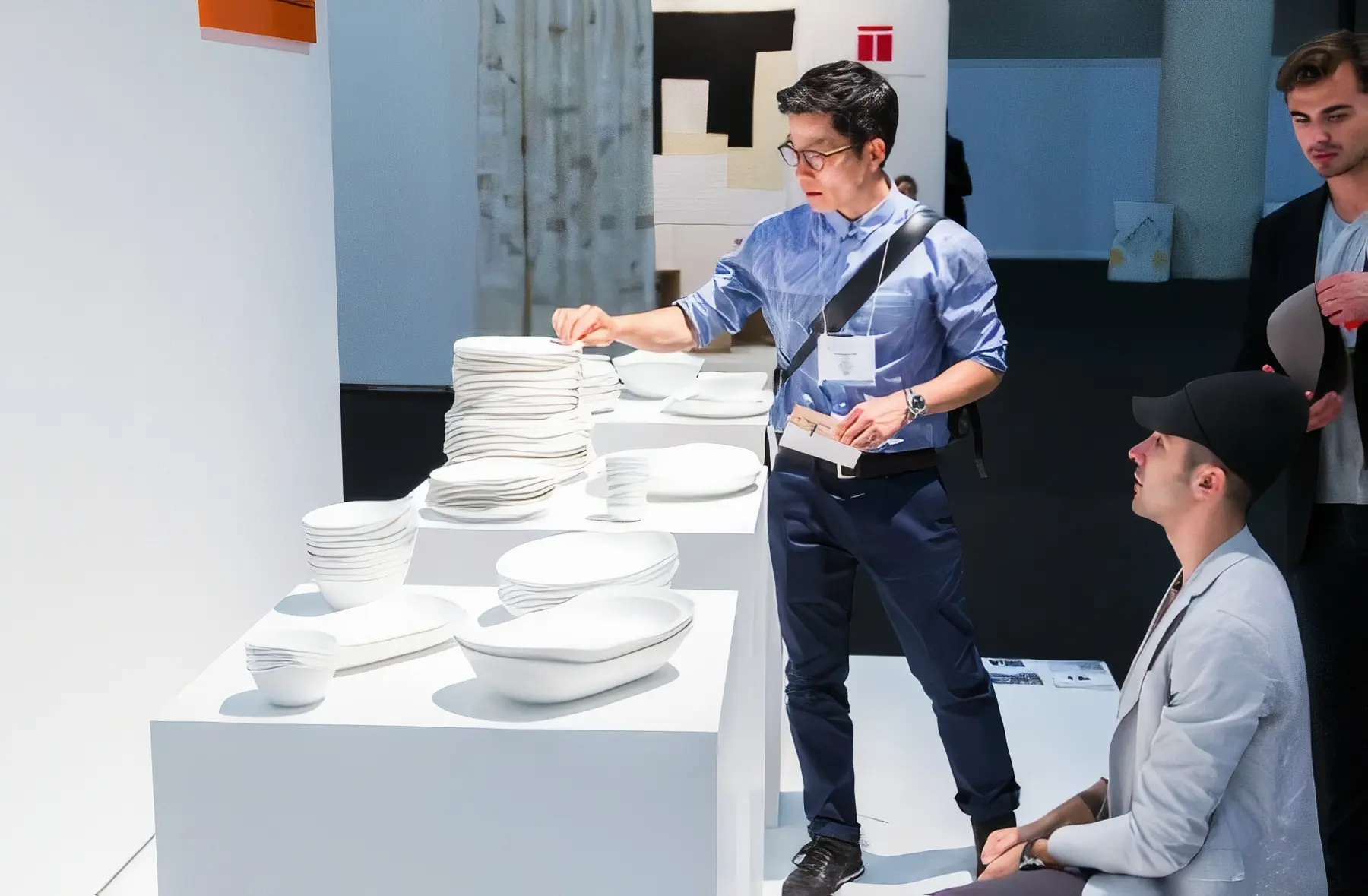
Selected for ICFF Studio 2015, the Bernhardt Design-sponsored platform for emerging designers, Relax was presented at the Javits Center during New York Design Week.
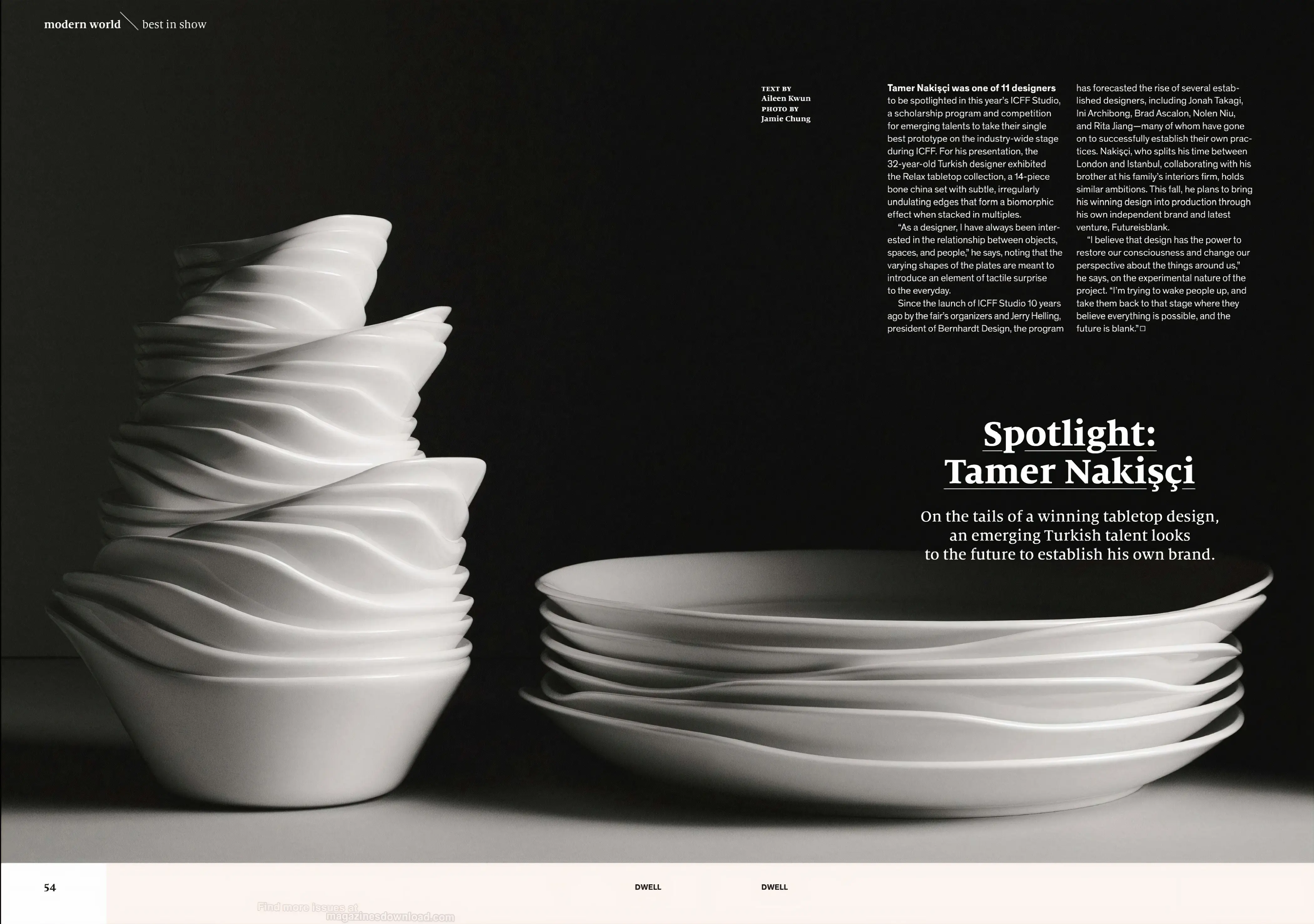
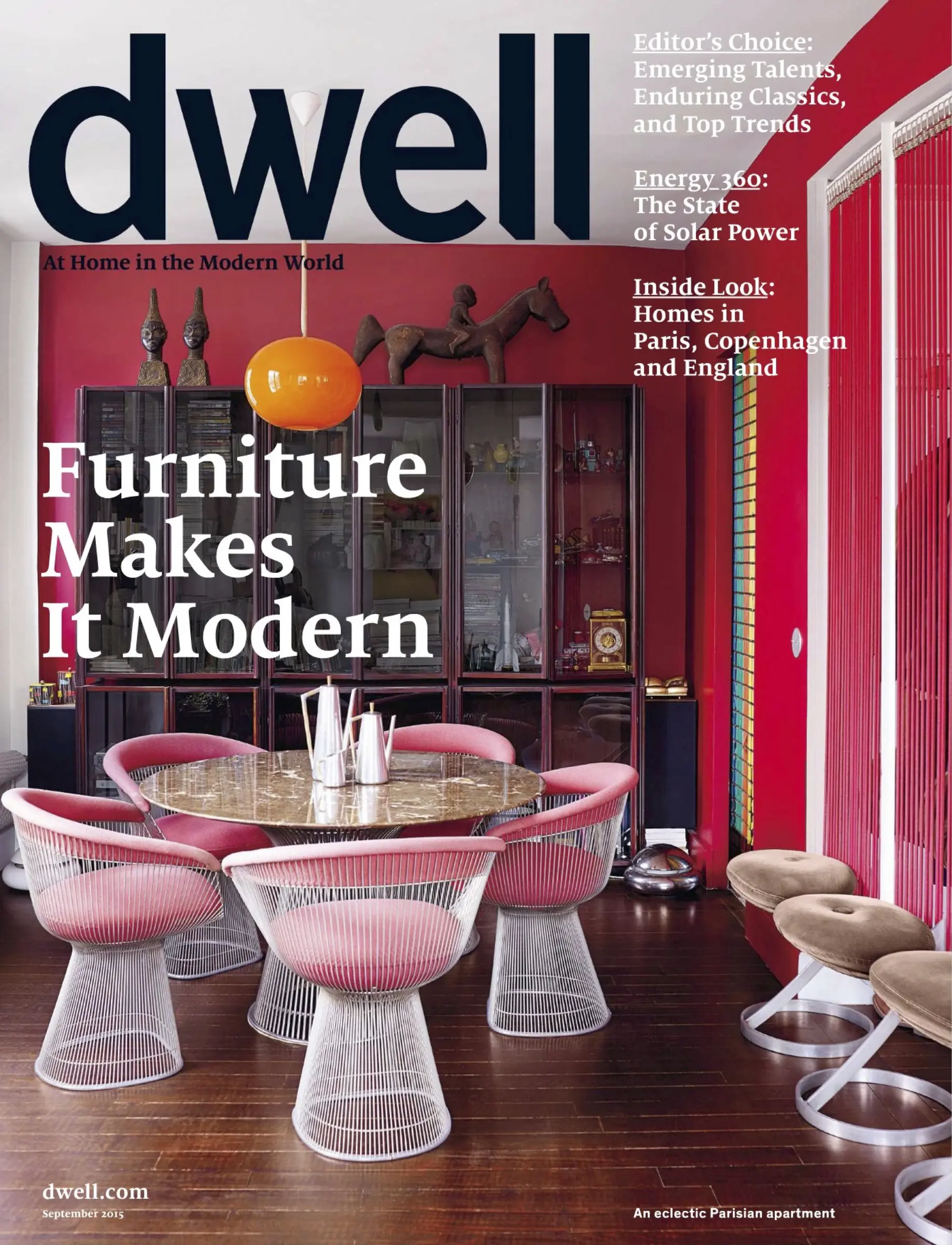
Following the ICFF Studio presentation, Dwell selected Relax for its Best in Showcoverage of NYC Design Week. The project appeared in the magazine's Modern World section in September 2015.
A plate you see
as if for the first time.
If an object can make you notice the food, the gesture or the person passing it to you, that attention is not decoration. It is part of how the object works.